


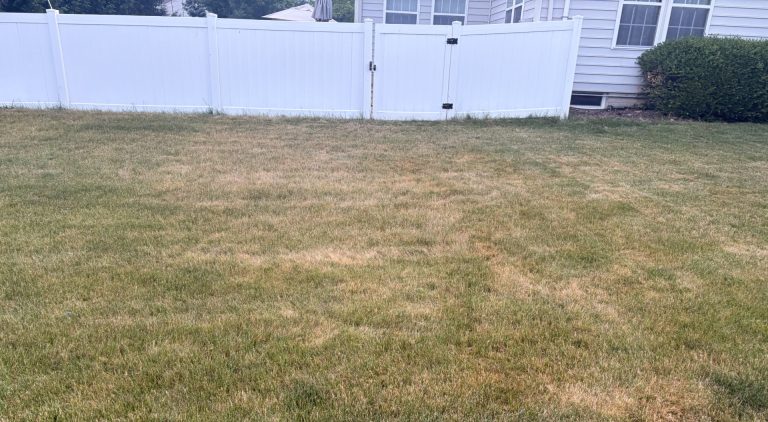
If you’ve noticed your lawn turning brown over the past few weeks, you’re not alone! The combination of high temperatures, intense sunlight, and below-average rainfall has caused many lawns to show signs of heat stress and drought dormancy.
The good news? In most cases, your lawn isn’t dead—it’s simply protecting itself.
What is heat stress?
Heat stress occurs when grass plants are exposed to prolonged periods of hot weather and insufficient moisture. As soil moisture levels decrease, grass blades begin to lose water faster than they can replace it.
To survive, the grass enters a dormant state, causing it to:
- Turn brown or tan in color
- Stop actively growing
- Leave footprints that remain visible after walking across the lawn
- Appear thin or patchy in sunny areas
- Develop a straw-like appearance
This is a natural survival mechanism that helps the grass conserve energy until cooler temperatures and rainfall return.
is my lawn dead?
Not necessarily.
Many cool-season grasses common in Ohio, including Kentucky Bluegrass, Perennial Ryegrass, and Tall Fescue, can survive several weeks of drought dormancy. While the lawn may look unhealthy, the crowns and root systems are often still alive beneath the surface.
Once adequate rainfall returns and temperatures moderate, dormant grass typically greens up and resumes normal growth.
How can i tell the difference between heat stress and disease?
Heat stress usually appears:
- Across large areas of the lawn
- In full-sun locations
- During extended hot, dry weather
- As a uniform tan or brown color
Diseases often appear as:
- Circular patches
- Irregular patterns
- Areas with active discoloration or fungal growth
- Spots that continue to spread despite adequate moisture
If you’re unsure whether you’re dealing with drought stress or a turf disease, our team can help evaluate the situation.
how do i help my lawn recover from heat stress?
When lawns are stressed, it’s important to not create additional stress. Here are some things you can do to recover from heat stress:
- Water Deeply and Consistently: Provide 1-1.5 inches of water per week, including rainfall. This should be early in the morning between 6am-10am to minimize evaporation.
- Raise Mower Height: Set your mower blades at 3-3.5 inches. Taller grass shades the soil to retain moisture and encourage deeper root growth. Also make sure your mower blades are not dull.
- Reduce Foot Traffic: Keep heavy activity, pets, and lawn mowers off the affected areas to prevent further damage to the weakened grass.
If you choose not to water your lawn, understand that your lawn may continue to go dormant until weather conditions improve. It can survive in this state for 3-4 weeks without dying and will naturally green back up wheen cooler fall temperatures return.
the bottom line
Brown doesn’t always mean dead. In many cases, your lawn is simply going dormant to survive challenging weather conditions. As temperatures cool and rainfall increases, most healthy lawns will recover naturally.
If you’re concerned about brown patches, thinning turf, or whether you’re dealing with drought stress, insects, or disease, contact Custom Lawns. We’re happy to help determine what’s going on and recommend the best course of action.